Sunday, August 27, 2017

GAMES OF INDIAN ORIGIN - PART 2

VARIATIONS OF CHESS

Review of literature suggests that the games of chess has had many variations and one of them is the very famous game of dice played by Yudishtira and Duryodhana, also know as 'pagade', which has been very well described in the epic Mahabharath.


This game can be played by 2,3 or 4 players. The roll of the dice predicts a players moves. This is a 8 squares games, constructed on a piece of cloth. The player has to move all around the squares, avoiding being taken down and at the same time trying to win over other players, by reaching the center of the cloth. Each player has 4 pawns to play with, and it's the players responsibility to bring all the pawns to the center of the cloth.

This game came to be known as 'Pachisi', which was played by the Mughal emperors during the 6th century AD, and evidence has been found in the Ajantha caves.


The variations of 'Pachisi' are the modern games Ludo (coined by the British) and Aggravation (a US version of ludo).


Literature review also points out that down south, there were even more variations of the game Pachisi. Around 10th century AD, the Tamil variations came to be known as 'Adu Puliattam'.


Also known as 'goats and tigers', involving 3 tigers and 15 goats. It's a 2 player games, where the player owning tiger will try encountering the goats, and the goats have to be moved strategically to avoid the tiger. It a tiger catches a lone goat, then the players loses a goat pawn, and if 4 goats surround a tiger, a tiger pawn is lost.

‘Nakshatraattam’ (Star game) is the one where each player cuts out the other and the game named ‘Dayakattam’ with four, eight or ten squares, is similar to modern day Ludo. 

Note that most of the pictures and sources are from veda.wikidot.com, wikipedia and Aphilomath Journal.

By Dr Srividya K

Sunday, August 20, 2017

GAMES OF INDIAN ORIGIN - PART 1

CHESS

The game of chess was invented in India and was originally called Ashtapada (sixty-four squares). It's believed that this game might have originated around 7th-8th century AD. “Ashtapada” in Sanskrit denotes a spider -“a legendary being with eight legs” and this game was played with a dice on an 8×8 checkered board. Back then the chess board were not black and white checkers, unlike the one we see now.


Other Indian boards included the 10×10 Dasapada and the 9×9 Saturankam. Later this game came to be known as Chaturanga. The Sanskrit name Chaturanga means ‘quadripartite’ — the four Angas (divided into four parts) which symbolize “the 4 branches of the army", which has been said in the Amarakosh, an ancient indian dictionary. Like real Indian armies at that time, the pieces were called elephants, chariots, horses and foot soldiers. Unlike modern chess, Chaturanga was mainly a game of chance where results depended on how well you rolled the dice. Played on an authentic cloth  by 2, 3 or 4 players, Chaturanga combines the basic strategy of chess with the dynamic challenge of chance as each move is determined by the random roll of a wooden dice. (Aphilomaths Journal - https://aphilomathsjournal.wordpress.com/2015/11/30/popular-games-sports-that-originated-in-ancient-india/) 

On May 3rd 2017, an exhibition 'The Art of Kreeda', as a part of South Asian Heritage month, Mr. Raheel Patel, curator of the exhibition showcased some of the board games that originated in India, and Chess being one of them. Mr.Patel has recreated the entire chess set, and he is of the belief that chess origination can be traced to the Indus Valley civilisation.

(Courtesy - https://www.bramptonguardian.com/community-story/7292877-pama-brings-indus-valley-civilization-board-games-to-peel/)

This picture above is a recreation of the game Chaturanga, where 2,3 or 4 players can play this game with the help of rolling dice.
(Courtesy - https://www.bramptonguardian.com/community-story/7292877-pama-brings-indus-valley-civilization-board-games-to-peel/)

Around 1983-89 Sir.William Jones opines in the 2nd volume of Asiatic Researches, that the game of chess is authentically of Indian origin. This is based on the testimony of Persians, and not from any manuscripts. The famous Persian poet Firdousi, in his famous Shahanama, describes the introduction of Chaturanga from 'Hind', as a Sovereign, and the Persians changed it name to 'Chatrang', and later with the conquest of Persia by Arabs the name changed to 'Shatranj'. 

(Aphilomaths Journal - https://aphilomathsjournal.wordpress.com/2015/11/30/popular-games-sports-that-originated-in-ancient-india/) 

The Persian and Arabic version of chess had camels also, which were part of cavalry for them. It's still highly debated as to the origin of the game of chess. But Majority of the evidence points to the fact that chess originated in India. There are more games that are derivatives from chess, which will be dealt upon in the next blog.

By Dr Srividya K


Sunday, August 13, 2017

INDUS VALLEY CIVILISATION - TOYS MADE FOR CHILDREN

The history of Indus valley civilisation has been very intriguing so far, and looking at it's history from play perspective has completely opened up a new world of knowledge. This write up is a continuation of the previous blog, which threw light upon the fact that the people, especially adults, did engage in many constructive and physically actives games.

Time and again literature review and archaeological excavations has also proved that play had equal importance to children of this civilisation. The National museum of Delhi  and Pakistan has a number of artifacts displayed that the archaeologists have been able to recover from excavation. Numerous toys were recovered made of clay, which were especially made for children, which leads us to believe the fact that children did involve themselves in lots of games.

Without much ado, let's take a look at the kinds toys used by children of those times. 


(Picture Courtesy: Google Images)

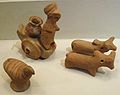
This artifact above is displayed in the National Museum, Delhi, which shows some figurines and toy carts which are movable.


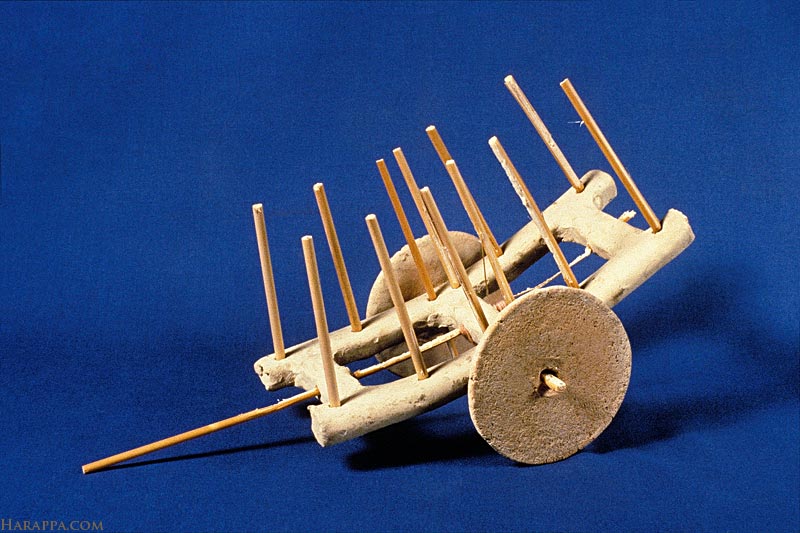
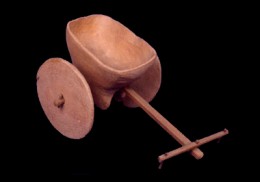
Few more toys in the form of carts. these toys reminds us of Channapatna toys, which are not just toys but speaks of the culture as well.
(Picture Courtesy: Google Images)


The below artifact displayed does resemble one of the modern day toys. The dice, marbles and some pawns used for games are recognizable. The most intriguing toy is the circular and rectangular mazes. These are clay marble mazes, whose modern day version is the one made of plastic, with a small metal ball inside secured with a plastic transparent top.

(Picture Courtesy: Google Images and Pinterst)


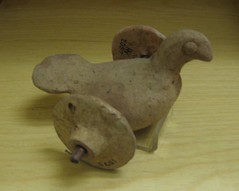
Some more collection of movable toys. A note of appreciation to the craftsmanship as well as the forethought of the makers of these toys, and again a look at these toys will bring in a feeling of dejavu!  
IMG_1534ver2 (my-india) Tags: india bird history archaeology wheel museum wales ancient asia south prince valley civilization mumbai civilisation indus harappan
(Picture Courtesy: Google Images)


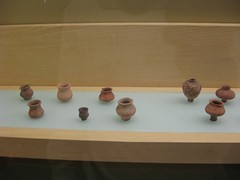
These toys resembles our modern kitchen set, which is actually so, made of clay created for the purpose of play.
                                          IMG_1585ver2 (my-india) Tags: india history archaeology museum wales miniature ancient asia south prince valley pottery civilization mumbai civilisation indus harappan
(Picture Courtesy: Google Images)


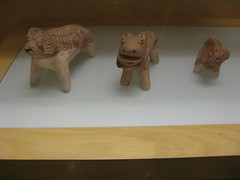
 Animal figurines resembling modern day zoo set.

IMG_1540ver2 (my-india) Tags: india game history archaeology animal museum wales toy ancient asia south prince valley civilization mumbai civilisation indus harappanImage result for delhi museum indus valley civilisation
Related image  
(Picture Courtesy: Google Images)


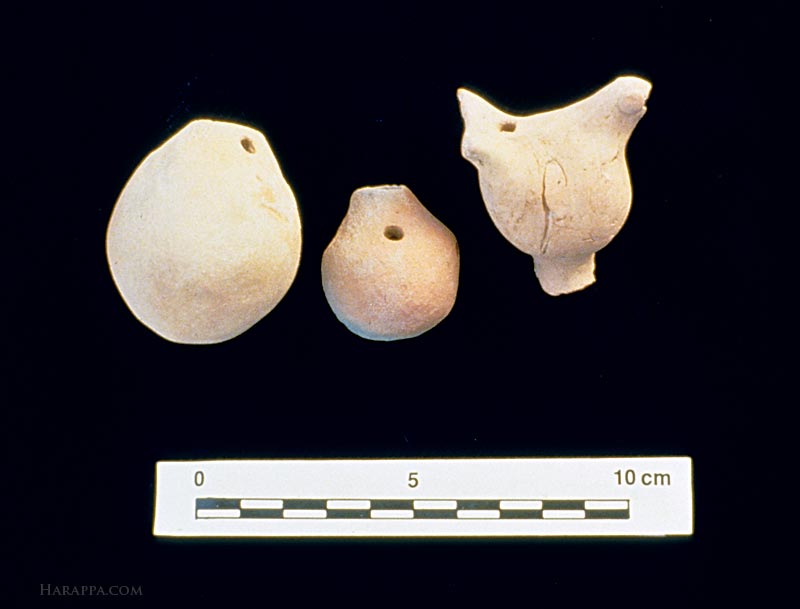
Hollow egg and bird shaped whistles most probably used to amuse children and also may represent pet birds like doves or partridges.

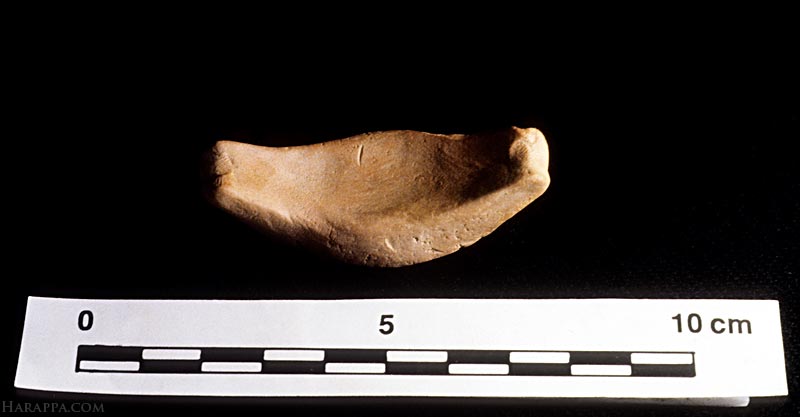
                                                                          Toy boat of Harrappa also made of clay.
.(Picture Courtesy: harappa.com)


Terracotta Figurines (my-india) Tags: pakistan india history archaeology museum wales ancient asia terracotta south prince valley civilization figurine mumbai civilisation indus excavation harappan mohanjodaro
(Picture Courtesy: Google Images)

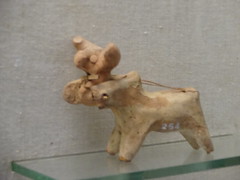
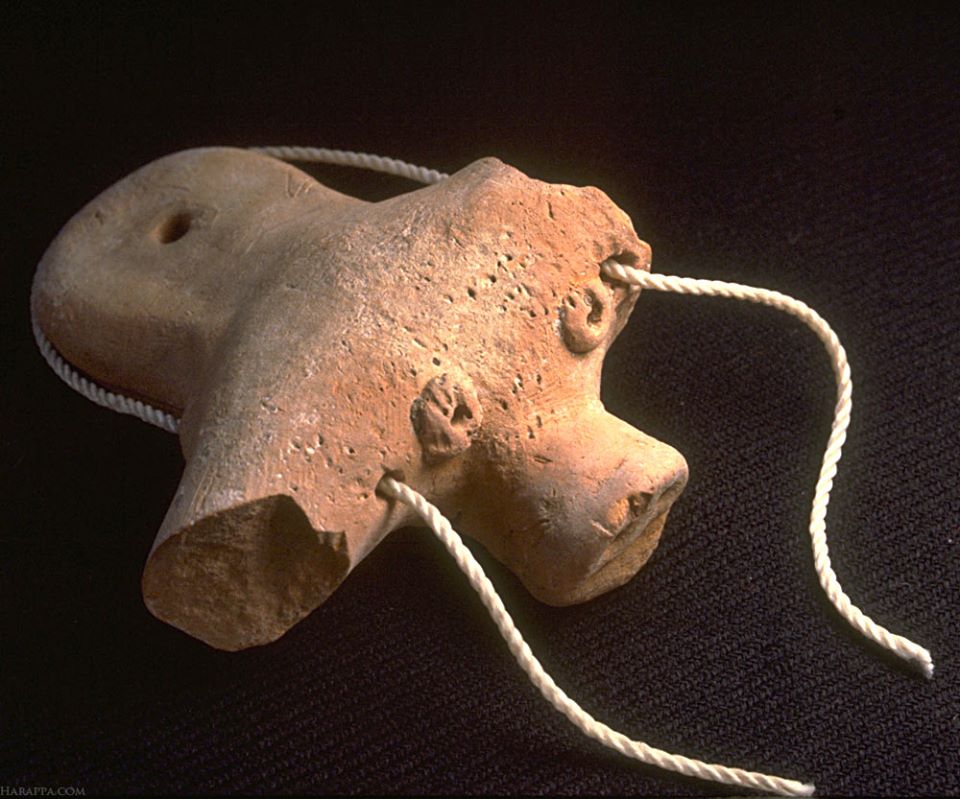
Figurines with movable heads from Harappa, which most of the time depicts cattle. They are usually pierced laterally through the neck and vertically or sagittally through the head in order to secure them to the bodies and control them with a cord. Jonathan Mark Kenoyer, https://www.harappa.com/slide/toy-boat-harappa

The pictures of artifacts illustrated above are one among the few handpicked ones. There is a treasure chest of artifacts that have been made available for the common man on the internet. The ones who felt this blog interesting can very well go ahead and look for many more.

By Dr Srividya K  


Sunday, August 6, 2017

INDUS VALLEY CIVILISATION

The Indus valley civilisation or Harappan civilisation originated during 2500 BC around the Indus valley, Harappa and Mohenjo-Daro, which now is eastern Pakistan. This civilisation is very well known in their advancement of technology and lifestyle. Facts about the civilisation have been accounted for from the vast excavations made by archaeologists, which explains about the way of life of the people of Indus valley.

The excavations conducted at the Indus valley sites also help us to understand the games and past times of the people of Indus valley. There is also evidence that play for children also had a lot of importance by the toys that has been unearthed from these sites. “A picture is worth a thousand words”, as the saying goes, let’s try to understand the prominence given to sports and games during the Indus valley period with the help of pictures of the relics unearthed.

(Picture Courtesy: Google Images)

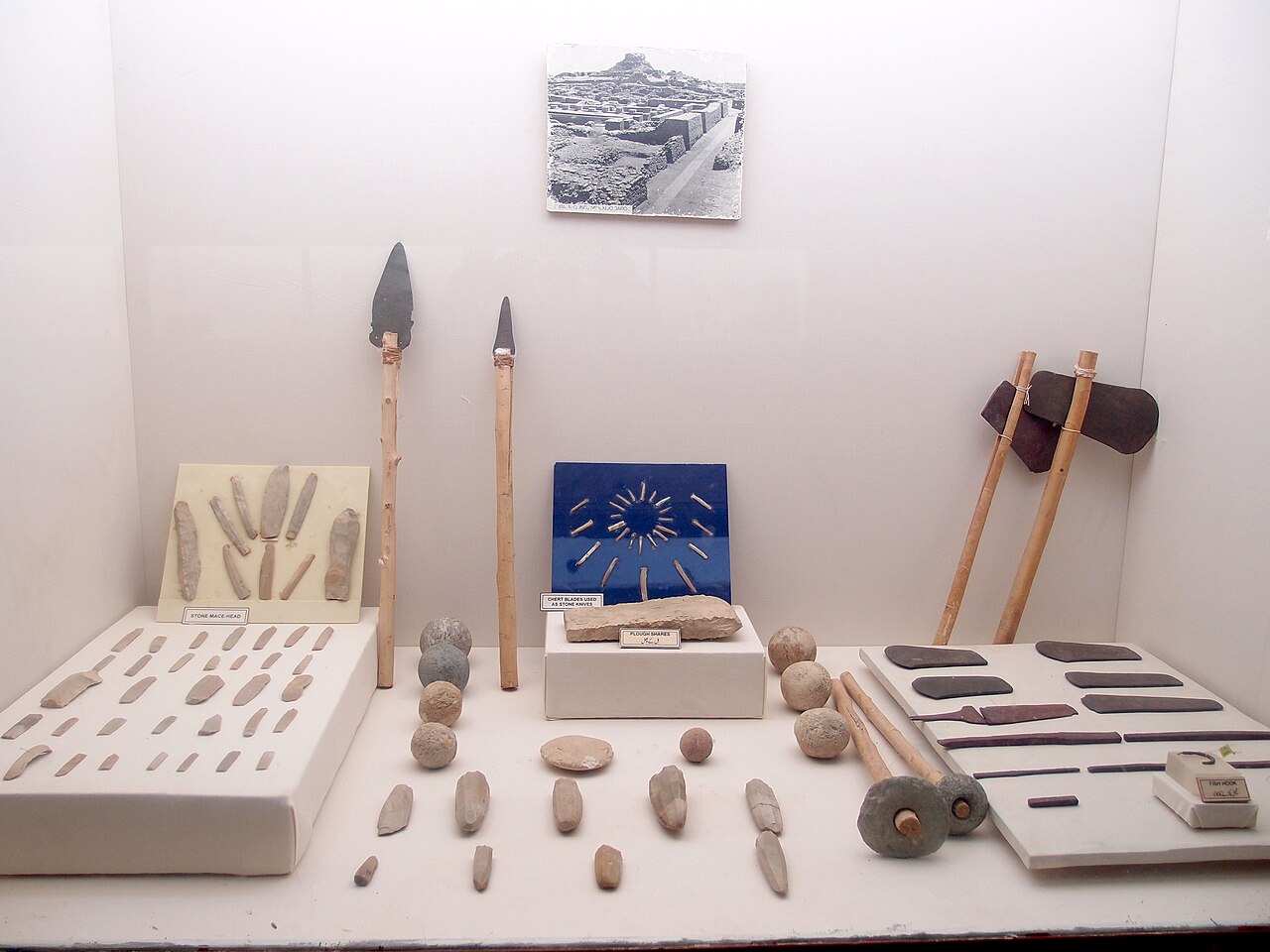
Take a look at the above picture! There is a weapon which resembles the modern day javelin, round balls which resembles the shot put ball of our time and a disc shaped instrument resembling out modern day discus. Literature review reveals that the javelin was called as’ toran’ and the discus as ‘chakra’. All these relics throws light upon the pastimes of the people, and also that games like javelin and discus throw could have originated from this period.


(Picture Courtesy: Google Images)

These images of bronze statues of a dancer from Mohenjo-Daro, points out to the fact that music and dancing have been the favourite past time of the people of Indus valley. The great bath of Mohenojo-daro conveys the fact that swimming also was an important sport.


(Picture Courtesy: Google Images)

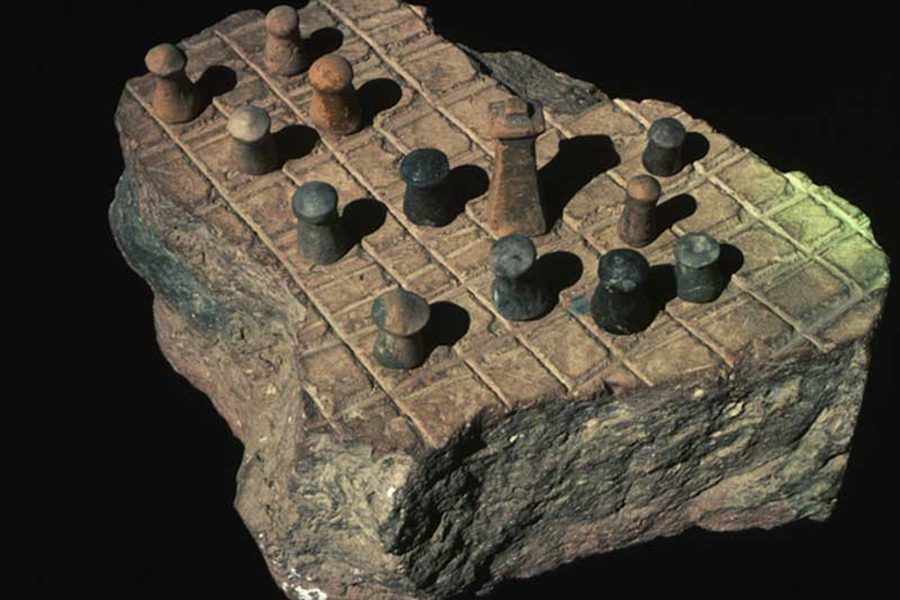
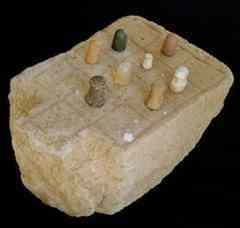
These relics of dices and marbles reveal that people played games which involved the use dice and marbles. The stone slab relic resembles the modern day chess, and literature review throws light upon the fact that this game was very much prevalent during the Indus valley period. The existence of hunting, punching or boxing as other forms of sports of the people of Indus valley practiced is evident from the seals recovered from the sites of Indus valley.

One very prominently appearing fact is that the forms of games that we see now a days , had existed thousands of years back, proving that the games have innovated over period of time and secondly, sports and recreation was given equal importance back then. 

By Dr Srividya K

Sunday, July 30, 2017

UNDERSTANDING PLAY, INDIAN PERSPECTIVE.

Play is of utmost importance as it contributes to the physical, social, cognitive and emotional well being of a child as well as adults too. The United Nations High Commission for Human Rights have recognised play as a right of every child. Looking back at the blogs that have been written, all of it traces the history of play in the western civilisation, and it’s very evident that the westerners did realise the value of play in a child’s life, and going forward play has been recognised as a right by the UN.

Tracing the history of play of western civilisation has been effortless as all the literature is available at a click. Tracing the history of play of Indian civilisation has been a herculean task, and it’s amazing to know that history of play in India can be traced to the 2500 BC, that is during the Indus Valley Civilisation period.

Meera Oka, et al., conducted a study on “A profile of children’s play in urban India”, where inferences can be drawn regarding the value and meaning of play in the Indian context which is a little different from the western context. Play has been described at two levels, one is ‘Bal Leela’, play viewed at a micro level,  is the most important feature and typical of childhood, on a day to day basis. ‘Leela’, at the macro level, is viewed philosophically, to understand the very nature of human existence, which views the entire universe as a creation and play. Analysis of commentaries from scriptures of Madhavananda (1978), Nikhilananda (1987), White(1994), Parthasarthy(1990); as well as poets like Kabir, Tagore, Ramdas and Rahim, suggest that child’s play are the antecedent of philosophy. These eminent authors viewed child’s play from two perspectives. One is appreciating a child’s prudence of getting into and out of play. The second perspective highlights upon the manner in which children engross themselves in play not bothered about their surroundings. Here are few excerpts as taken from the study conducted by Meera Oka, et al to help understand the link between philosophy and play.

Madhavananda’s commentary on ‘Bhagwat’:
As a child does while playing one should be completely absorbed and dedicated to the activity one undertakes and yet have the awareness of its temporary nature, and of life itself.

Nikhilananda’s translation of ‘Atmabodh’:
During childhood one is completely lost in play, during adolescence in studying, and during adulthood in home and responsibility, so where is the time to attend to God!

 Madhavananda’s commentary on ‘Vivekachudamani’ :
A child plays with its toys forgetting hunger and bodily pains…. Exactly so does the man with real knowledge take pleasure in reality, without ideas of ‘I’ or ‘mine’ (as in possession).

Kabir’s poem:
Worship, service, holy fasts and conduct that conforms, to canonical law….
Are like a girls’s play with her dolls,
To give up this make believe will be hard…

Tagore’s poem:
Tempest roams in the pathless sky
Ships get wrecked in the trackless water
Death is abroad and children play.


With this introduction to Indian perspective of play, let’s look at the concept of play during the Indus Valley civilisation in the next blog.

By Dr.Srividya.K

Sunday, July 23, 2017

KINDERGARTEN

Play is the highest expression of human development in childhood for it alone is the free expression of what is in a child’s soul. – Friedrich Froebel

Friedrich Froebel, known as the ‘Father of Kindergarten’, was the first person to lay the foundation for modern education, and also stressed on the importance of play. His philosophy revolutionised the concept of play. He recognised the fact that children have unique needs and capabilities, which has to be tapped, to help children preform to their full potential. Froebel was  an ardent follower of Pestalozzi, whose philosophy he took forward and refined it, creating the concept of ‘kindergarten’, and also developed educational toys called as ‘gifts’ for children.

Let’s look in detail the meaning and concept behind kindergarten approach, for which I have to take you back to 18th and 19th century history, which has been a good source for me to know more about Froebel and kindergarten approach or it can be called as philosophy too.

Froebel was also born to a German family, but lost his mother when he was just a nine month old infant. Froebel never got love and attention from his father, which left him with a yearning which was never satisfied. Froebel spent most of his childhood playing in the garden and being amidst nature, which was a great learning experience to him, the of nature was to such and extent that it became a part of his philosophy too.

Literature review suggests that Froebel tried different kinds of employment which was not successful in giving him a sense of satisfaction. Finally a job as a teacher at a  progressive model school in Frankfurt, which worked on the basis of  Pestalozzi’s philosophy, convinced Froebel to take up his vocation as teaching.
.
Froebel soon discovered the short comings of Pestalozzi’s philosophy and decided to start a school of his own. In 1837 he founded ‘Child Nurture and Activity Institute’, which he later changed as ‘Kindergarten’.

Kindergarten means ‘garden of children’, to this I also another quote of Froebel, which will help understand the word kindergarten better.  "Children are like tiny flowers: They are varied and need care, but each is beautiful alone and glorious when seen in the community of peers."

Prior to Froebel's kindergarten, children under the age of 7 did not attend school. It was believed that young children did not have the ability to focus or to develop cognitive and emotional skills before this age. However, Froebel expressed his own beliefs about the importance of early education in the following way: ". . . because learning begins when consciousness erupts, education must also." (Cited from Scholastic Early Childhood Today).

Froebel philosophy of kindergarten believes in creative play and self activity, singing and dancing for healthy activity and observing and nurturing plants in a garden for stimulating awareness of the natural world. This philosophy gives freedom to the children to explore things as per their wish, with the role of the teacher being just there to facilitate and encourage their self expression through play. A typical kindergarten approach helps develop physical, emotional and social skills in children.

Froebel believed that women had the natural motherly instincts which made them more suitable to play the role of a teacher, but he looked upon men as fatherly figures too, and felt both must be an important part of a child’s education. Froebel believed in the whole family being a part of the education process and not just the child. This very belief of his comes out of his early life experiences where he didn't have the blessing of a nurturing environment. A typical classroom set up was also envisaged by Froebel, where children were given table and chair which they could use to work on ‘gifts’.

Froebel’s most important contribution to kindergarten were ‘gifts’ or ‘occupations’. These are  educational toys consisting of spheres, cubes, prisms and other things which were designed to stimulate learning. Also another contribution from Froebel is he started a publishing firm for play and other educational materials, also including a collection of Mother-Play and Nursery Songs, with elaborate explanations of their meanings and use. These books have been translated into many other foreign languages and have been immensely benefited by it.

 The modern day preschools and kindergarten have been benefited a lot by Froebel, but the essence of the philosophy is completely lost. A modern day kindergarten now a days known as ‘PreKG, LKG and UKG', don't seem to follow the kindergarten method, but revert to reading and writing, with little importance given to play and singing. ‘Gifts’ are completely out of  the picture, the classroom atmosphere appearing more rigid and disciplined.


Froebel says, “Play is the highest level of child development . . . It gives . . . joy, freedom, contentment, inner and outer rest, peace with the world . . . The plays of childhood are the germinal leaves of all later life.” So lets hope and work towards making play an important part of a child’s life.

By Dr.Srividya.K

Sunday, July 16, 2017

PLAY AFORE

We should not teach children the sciences; but give them a taste for them – Rousseau

Jean Jack Rousseau’s philosophy was one among the first to talk about play and also in influencing the ideas of other philosophers about play and education. A peek into Rousseau’s life history will help us understand better about his views on education and play. Rousseau is very famous for his writings in the book ‘Emile – or On Education’, which is about a boy named Emile, which portrays a child’s life at different stages of development. In his book Rousseau gives insights in the upbringing of children, which emphasises on the importance of education and experiences. Rousseau was of the opinion that children must be kept away from books and interactions must happen with the world.

 Literature review throws light upon the fact that, Rousseau never went to school nor had any formal education,or proficiency in reading and writing. He was never allowed to play among children of his own age, all the interactions he had were from his father. To add more Rousseau had five children whom he left for foster care as he felt he was not capable of rearing them, which he regretted later.

Rousseau’s ideas arouse out of his own life experiences and as well because of his proficiency in botany, music and philosophy. The main crux of Rousseau’s philosophy is that children must be left alone to explore the natural world, and believed that play is a child’s right which cannot be contended. According to Rousseau play gave freedom to children, giving way for releasing pent up energy and emotions. Play helps in the development of the senses, and helps children experience world through sensory experiences and being in connection with things. Rousseau believed in learning by doing, rather than learning by reading. One important aspect to note is that it  was Rousseau who was the first to explain the stages in human development.

Rousseau’s work influenced Johann Heinrich Pestalozzi, a Swiss writer, philosopher and defender of the poor also known as “Father of Modern Education” who valued play as central to human fulfilment and achievement at each stage of development (cited in Free Play in Early Childhood). Pestalozzi was influenced by Rousseau’s philosophy and sought to put it into practice.”Imagine a school where children attend 10-hour-long classes, six days a week. Where students teach each other and there are no marks or exams. Children work with saws, hammers, and planes. They operate lathes, a printing press and a bookbindery. Weekends are for hiking (children must have memorised the maps and collected the equipment in advance), swimming, and ice-skating. Core subjects include Chemistry, Physics, Zoology, and Botany. This school wasthebrainchildofPestalozzi.”

Pestalozzi believed in providing public education for poor children. He insisted that every child is innately educable and deserves to be raised as a contributing member of society. And he had actions to match: Pestalozzi took poor children into his own home, and eventually created the YverdonSchool (Citied from Community Play Things by Miriam LeBlanc).

Pestalozzi believed that education should develop the power of ‘head, heart and hand’, the three H’s. Pestalozzi believed in following a curriculum, which fulfils the needs of a child, controlled by the child( child centred approach), developmentally appropriate, linking home and school (association between teachers and parents), using love and not authority in dealing with children and finally teacher training. This work of Pestalozzi, affected the philosophy of Frobel, a German philosopher, who was proposed the kindergarten philosophy and experimented it too.

Let’s look at the kindergarten philosophy in depth the next blog. Until then I would suggest that please do take some time to read up a little on the life histories of Rousseau and Pestalozzi, which I promise will be worth while.

By Dr.Srividya.K